
Computer Science
Senior High
 Notes
Features of Hardware Components: The IPOSC
Topic: Y1 Features of hardware components: input, processing, output, storage, communication
An introduction to the five key categories of computer hardware and the specific functions each performs within a computer system.
What's inside
Overview of hardware components
The IPOSC Symphony
The computer system is built from five main hardware categories: input, processing, output, storage and communication. Each category contains devices that work together to allow data to be entered, transformed, presented, saved and transferred. Think of a computer system as a bustling commercial kitchen in Accra during the lunch rush. Raw ingredients arrive at the back door (Input), the head chef chops, seasons, and fries them on the stove (Processing) while keeping recipe cards and chopped onions on the immediate counter (Primary Storage) and bulk sacks of rice in the locked storeroom (Secondary Storage). Plated dishes go out to hungry patrons (Output), and dispatch riders carry orders across town to other branches (Communication). Every piece of hardware you can physically tap with a fingernail belongs to one of these five guilds.
Input hardware
Input devices capture data and commands from the user or other sources and convert them into digital signals the computer can understand.
Keyboard: converts keystrokes into binary codes.
Mouse or touchpad: translates movement into cursor position.
Scanner: transforms printed images into digital files.
Microphone: changes sound waves into audio data.
Processing hardware
The processor (CPU) carries out the instructions of a program. It contains:
ALU (Arithmetic‑Logic Unit) - performs calculations and logical operations.
Control Unit - directs the sequence of operations and manages data flow.
Registers - small, fast memory locations that hold intermediate data.
Its function is to fetch, decode, execute and store results of instructions.
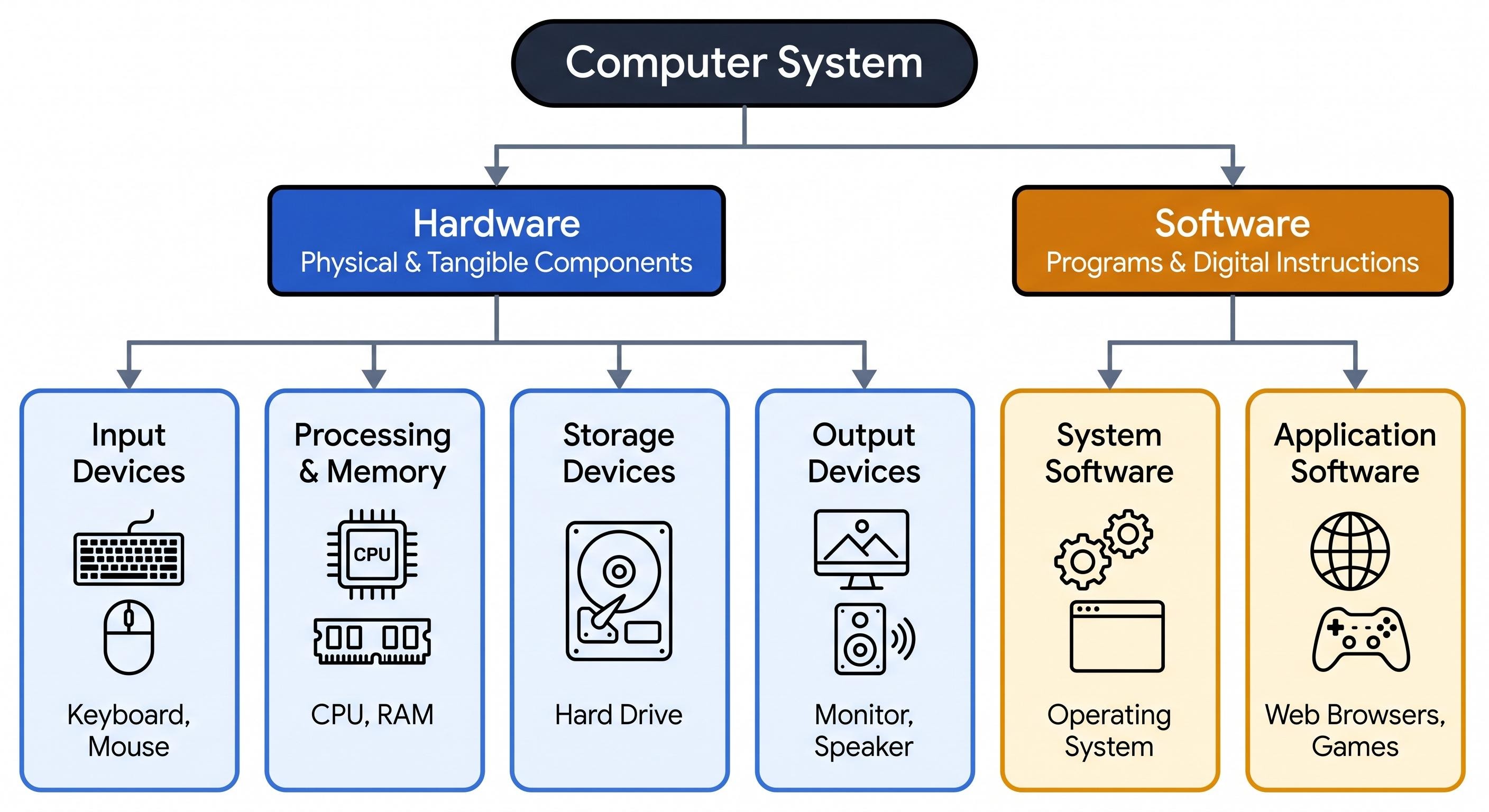
computer-system
Output hardware
Output devices present processed information to the user or other systems.
Monitor - displays visual information.
Printer - produces a hard‑copy of documents.
Speaker - converts digital audio into sound.
Projector - projects visual output onto a larger screen.
Open the full resource free with a TudHub account.
More on Features of hardware components: input, processing, output, storage, communication
Other resources you can find on TudHub.